bsen +387 36 727 080

History of Konjic

A Valuable Archaeological Heritage

A Brief History of Konjic

The continuity of life and human settlement in the present-day municipality of Konjic spans 4,000 years. The abundance of water, forests, and wildlife attracted people, presumably as far back as the Paleolithic, while their life in the Neolithic period is evidenced by dwellings and artifacts found in Konjic itself, as well as in Donje Selo and Lisičići.

The Greek geographer Strabo left a record of the struggle between the Illyrian tribes of the Adriatae and Autariatae over a source of salt water (from 360 to 840 BC), and in addition, one of the main roads connecting Rome and Dalmatia with the Danube region passed through the territory of the present-day municipality of Konjic.
A Rich Archaeological Site

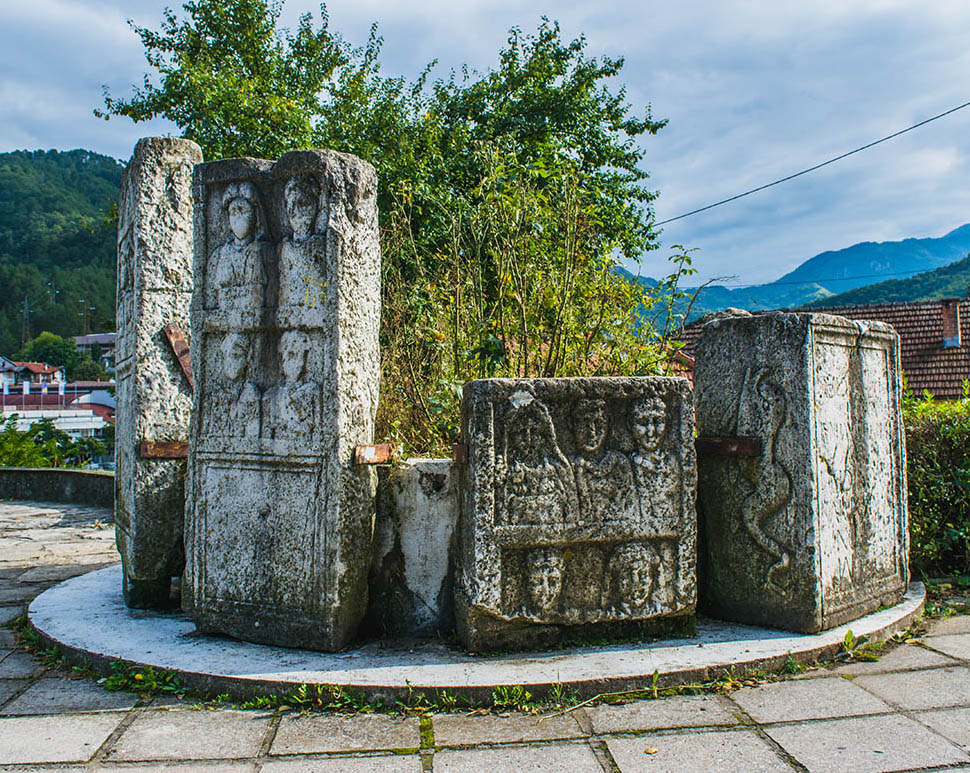
The Crkvine site near Lisičići is considered one of the most important Roman settlements in this area, where, among other things, archaeological remains of statues of the goddess Diana and the god Mithras were found. Above the railway station in Konjic, on the hill of Repovica, what are perhaps the most valuable archaeological remains in Konjic were discovered — a sanctuary of the sun god Mithras from the late 4th century.

A stone altar and a stone relief depicting the rituals of the Mithraic religious sect have been preserved. This relief, illustrating the cult of the god Mithras, is among the most precious exhibits of the National Museum in Sarajevo. As for the early Middle Ages, in Konjic this period was already marked by Slavs who lived in community with the Avars (Obri).

In the charter of the Hungarian-Croatian King Béla IV from 1244, the Neretva Parish is listed among the Bosnian parishes. As a territorial-political organization, the Neretva Parish had existed under this name earlier and was an independent parish, before later becoming part of the medieval Bosnian state. As early as 1356, a settlement on the land of present-day Konjic is mentioned, though not yet under the name Konjic.

That would happen on June 16, 1382, when a merchant caravan passed through Konjic on its way to Dubrovnik. It was then that the town of Konjic was mentioned in writing for the first time, and it would go on to become one of the greatest centers of the Bosnian Church and its Bogomils.

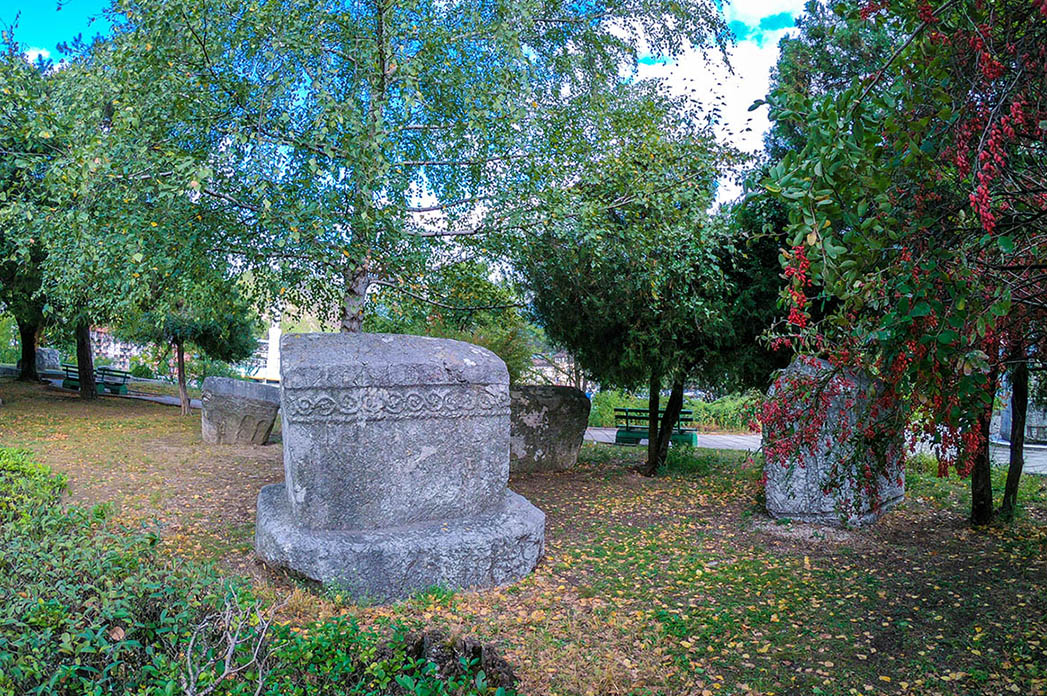
June 16 is today observed as Konjic Municipality Day, and as part of the heritage from the time of the medieval Bosnian state, we today inherit over 150 registered necropolises and over 4,160 stećci (medieval tombstones). Also notable from this period are the stone judges’ chairs carved from a single block of stone, one of the three most famous in Bosnia and Herzegovina having been found in Bukovica near Konjic.

In 1463 (1477, the Belgradžik kadiluk), the Ottoman period of rule began in Konjic. The left bank of the Neretva, with today’s historic core — the čaršija (old bazaar) — would develop intensively. Over the centuries, 5 mosques were built in Konjic, as well as the old bridge, which would further adorn both the town and the Neretva River.

The bridge, through the generosity and benevolence of Haseći Ali-aga Kolaković, was built in 1682, and was destroyed during the retreat of the German Nazis on March 3, 1945.

In early October 1878, Konjic came under the administration of the Austro-Hungarian monarchy, and their 40 years of rule left a lasting mark, fundamentally transforming the appearance of the town as well as the habits of its inhabitants. The social landscape of the town changed, along with its overall economic and cultural life. Significant changes were made to the urban layout of the town, as the center of gravity of the city’s structure shifted from the left to the right bank of the Neretva.

Nevertheless, on the left bank, 8 years after the change of authority, the Orthodox Church of Saint Basil was erected. On the right bank stands the Roman Catholic Church of St. John the Baptist, designed in 1893 by Josip Vancaš — the most significant architect of that era — whose construction was carried out in stages, with its bell tower completed only in 1919.

In 1889, the Metković–Mostar railway line reached Konjic, and in 1891 it was connected to Sarajevo as well. In 1918, Konjic and Bosnia and Herzegovina began sharing first the fate of one, then another Yugoslavia — during the latter, Tito’s Yugoslavia in particular, new settlements sprang up, filling in and replacing old ones in the image of European towns. It was then that Konjic also became a regional industrial center. The development of the metal industry would reach unforeseen proportions, and the Igman company would enable a higher personal and social standard of living for the people of Konjic.